


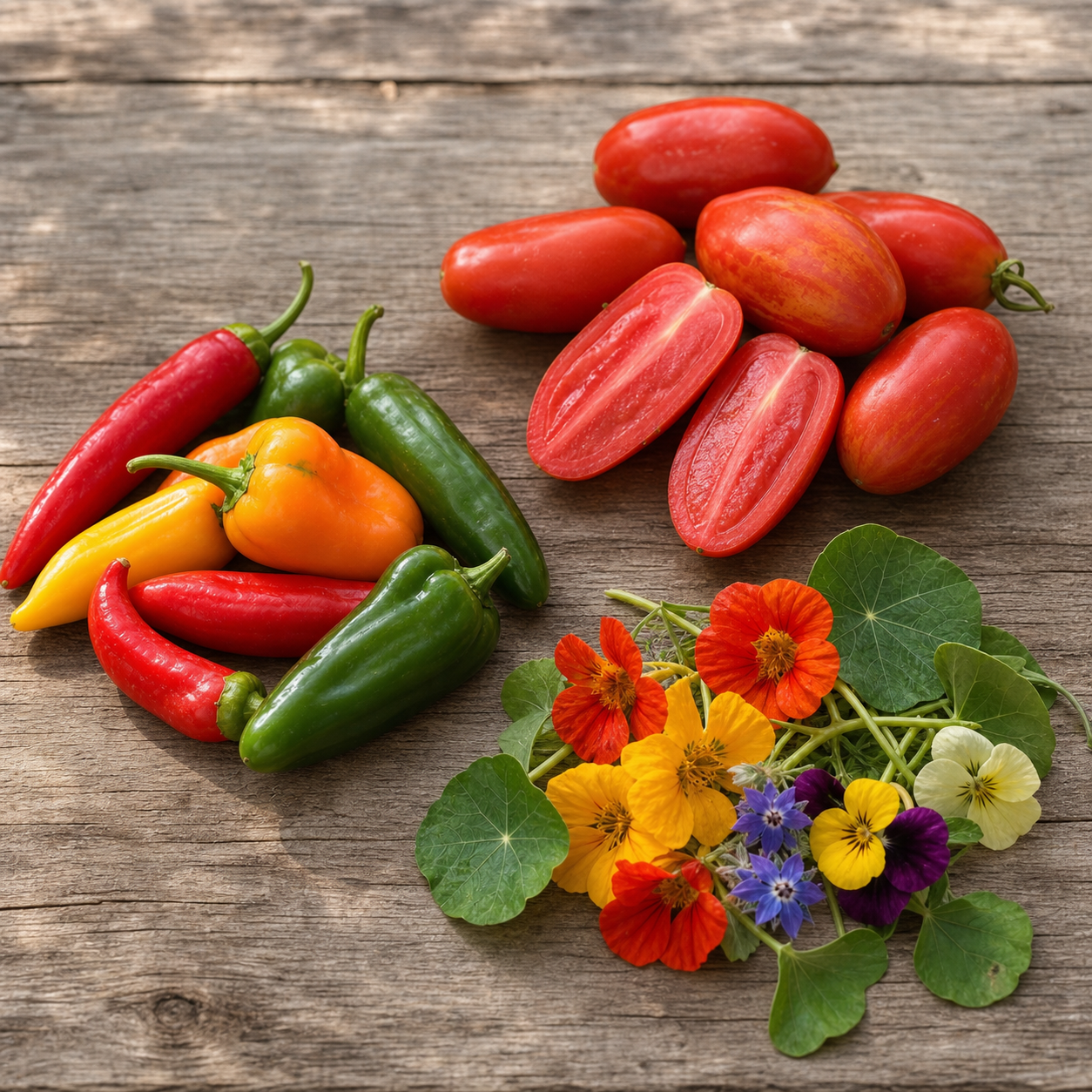



Looking for seeds now? Browse Casa Verde's complete pepper seeds for Canadian gardens, including sweet peppers, jalapeños, frying peppers, seasoning peppers, rare chilies, and superhots.
The best pepper for a Canadian garden is not automatically the earliest pepper in a catalogue. A useful variety combines a realistic season length with good flavour, manageable plant size, and a harvest you actually want to cook. Small-fruited peppers often ripen sooner than large bells, but there are productive sweet, mild, and hot options in every category.
What makes a pepper suitable for Canada?
Look beyond a single maturity number. Seed companies may count maturity from transplanting, while garden conditions, pot size, spring temperatures, and sunlight change the result. The most dependable traits are relatively fast fruit set, smaller or medium fruit, a plant that performs in containers or protected spaces, and a culinary use that makes green fruit valuable before full colour.
Best fast and flexible peppers
Early Jalapeño
Early Jalapeño is a sensible starting point for salsa, pickling, stuffing, and fresh use. Jalapeños can be harvested green, so gardeners do not have to wait for every fruit to turn red.
Shishito and Fushimi
Shishito and Fushimi produce slender peppers that are useful while green. They fit containers, raised beds, and small gardens, and they are ideal for blistering whole in a hot pan.
Padrón
Padrón is another harvest-young pepper. Picked small and green, it is quick to cook and does not depend on a long ripening window.
Best sweet and no-heat peppers
Habanada
Habanada carries the floral aroma associated with habaneros without the same heat. It is a strong choice for sauces, roasting, and fresh eating when flavour matters more than Scoville units.
Sweet Drop Biquinho
Sweet Drop Biquinho produces small beaked peppers suited to pickling and snacking. Small fruit are helpful in uncertain summers because the plant is not trying to finish a heavy blocky bell pepper.
Ajvarski and Jimmy Nardello
Ajvarski is selected for roasting and sauce, while Jimmy Nardello is a thin-walled frying pepper. Both earn garden space because their culinary purpose is clear.
Mini bells and banana peppers
Multicolor Mini Bell and Bananarama offer familiar sweet-pepper uses without depending entirely on large fruit. They work well for raw snacks, quick sautés, and pickles.
Best peppers for sauces and preserving
Hot Portugal
Hot Portugal is a versatile hot pepper for drying, sauce, and flakes. Long narrow fruit are generally easier to ripen than thick, oversized fruit.
Wildcat Cayenne
Wildcat Cayenne is useful for hot sauce, drying, and powder. Cayenne-style peppers also provide a productive way to build pantry heat from a modest garden footprint.
Aji Cachucha and Aji Dulce
Aji Cachucha and Aji Dulce Puerto Rico are aromatic seasoning peppers for sofrito, beans, rice, stews, and marinades. They are worth growing when the goal is kitchen fragrance rather than extreme heat.
What about long-season specialty peppers?
Canadian growers can absolutely grow aji peppers, rocotos, habaneros, and superhots, but those plants benefit from an earlier start and a warm microclimate. Use containers that can be moved, dark pots that warm quickly, a greenhouse, or a protected south-facing location. The Aji Amarillo is particularly rewarding for cooks, but it should not be treated like a fast jalapeño.
Choose by the way you cook
| Kitchen goal | Good starting varieties |
|---|---|
| Blistering and frying | Shishito, Fushimi, Padrón, Jimmy Nardello |
| Pickling | Biquinho, banana pepper, jalapeño, cherry pepper |
| Roasting and spreads | Ajvarski, Sweet Spanish, poblano |
| Hot sauce and drying | Hot Portugal, cayenne, Thai pepper, habanero |
| Aromatic cooking | Habanada, Aji Dulce, Aji Cachucha |
A balanced six-plant Canadian pepper garden
For variety without chaos, plant one early jalapeño, one frying pepper, one sweet roasting pepper, one seasoning pepper, one small pickling pepper, and one experimental hot pepper. That mix provides useful harvests even if the longest-season plant is late.
Plan the season
Read when to start pepper seeds in Canada before sowing, then use the complete Canadian pepper-growing guide for lighting, transplanting, feeding, and harvest. Still deciding on heat? See sweet vs. hot pepper seeds.
Browse Casa Verde's complete pepper-seed collection →
Want exact dates for your garden? Use the free Canadian pepper seed-starting calculator with your expected last spring frost date.