




 Kitchen Pepper
Fushimi Japanese Pepper
The Fushimi Japanese pepper (Capsicum annuum) is an heirloom variety from the Kyoto region of Japan, prized for its sweetness and tender, thin walls. It is a high-yielding and prolific producer, popular in traditional Japanese cuisine. ...
Shop all pepper seeds in Canada
- Origin
- Japan
- Flavor: Mildly sweet and fruity, often with hints of edamame. The flavor is best when harvested green but remains delicious if left to ripen to red.
- Heat: Generally considered a sweet pepper with no heat (0 SHU), though some variations or late harvests can sometimes develop a very mild heat (up to 2,500 SHU).
- Origin: An heirloom from Kyoto, Japan, where it is classified as a "Kyo-yasai," or traditional vegetable. It has been cultivated in the region since at least the Edo period.
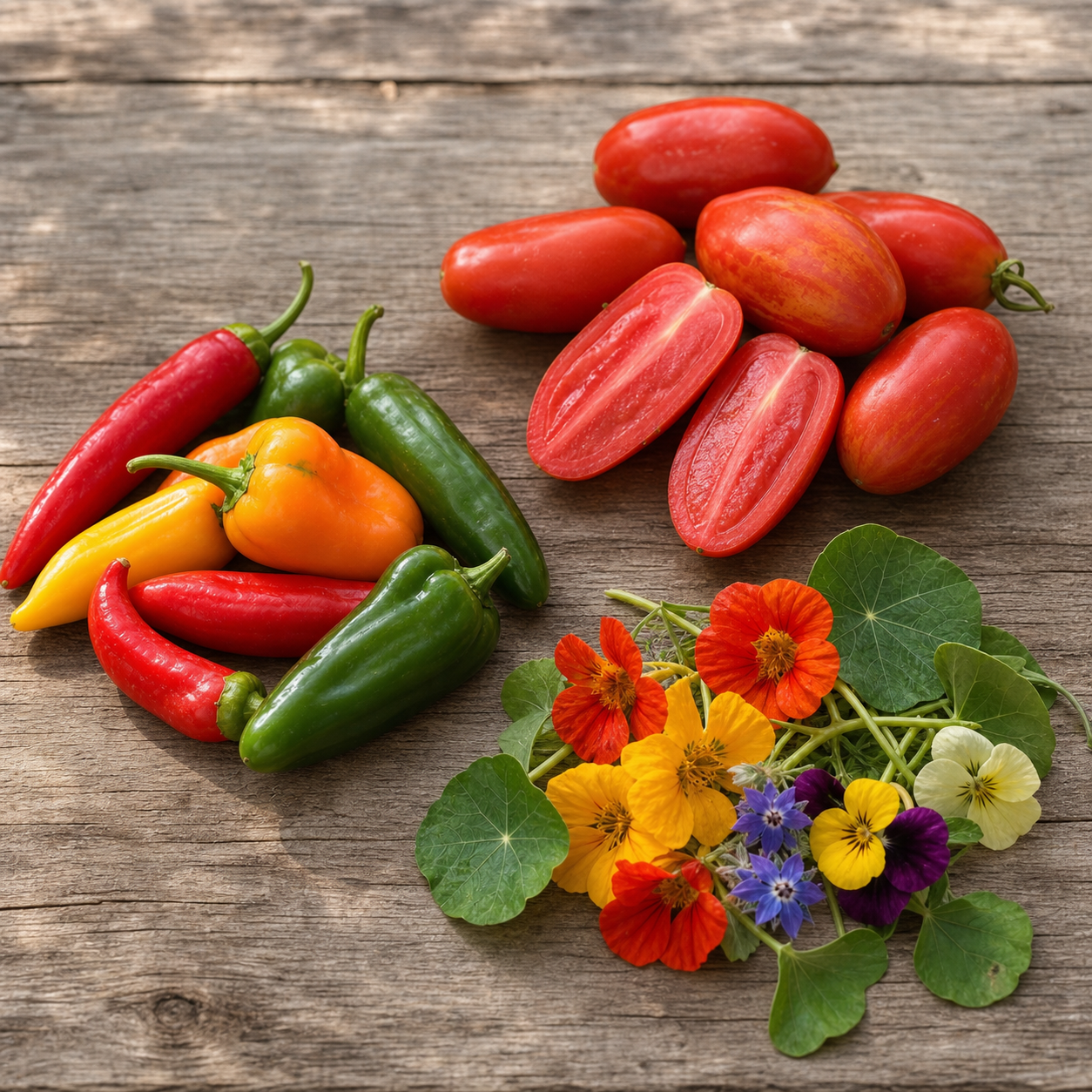
- Appearance: Long, slender pods, about 6 inches in length, with a slightly tapered shape. The pods have thin, crisp walls and a bright green skin that eventually ripens to a vibrant red.
-
Culinary Uses:
- Blistered and fried: Fushimi peppers are often blistered in a hot pan with a little oil and salt, which enhances their sweet flavor. This preparation is a popular Japanese finger food or side dish.
- Tempura: They are commonly battered and deep-fried as tempura, a classic use that highlights their thin walls and tender flesh.
- Stir-fries and salads: Their tender skin and sweet flavor make them excellent for stir-frying or adding raw to salads and other fresh dishes.
- Grilling and pickling: Fushimi peppers also stand up well to grilling and are a popular choice for pickling.
Start indoors 8–10 weeks before last frost. Germinate at 26–30 °C on a heat mat; peppers stall below 22 °C. Pot up to 10–15 cm before hardening off outside after nights stay above 12 °C.
Feed balanced through bloom, then bump potassium for fruiting. Stake taller varieties. More detail in our full Canadian growing guide.
Match the pepper to the technique: thin-walled varieties blister fast in a hot pan; thick-walled ones roast or stuff beautifully; fruit-forward ones make balanced sauces and pickles. The variety's flavour profile is your shortcut — see Choosing the right pepper for a use-case guide.


