


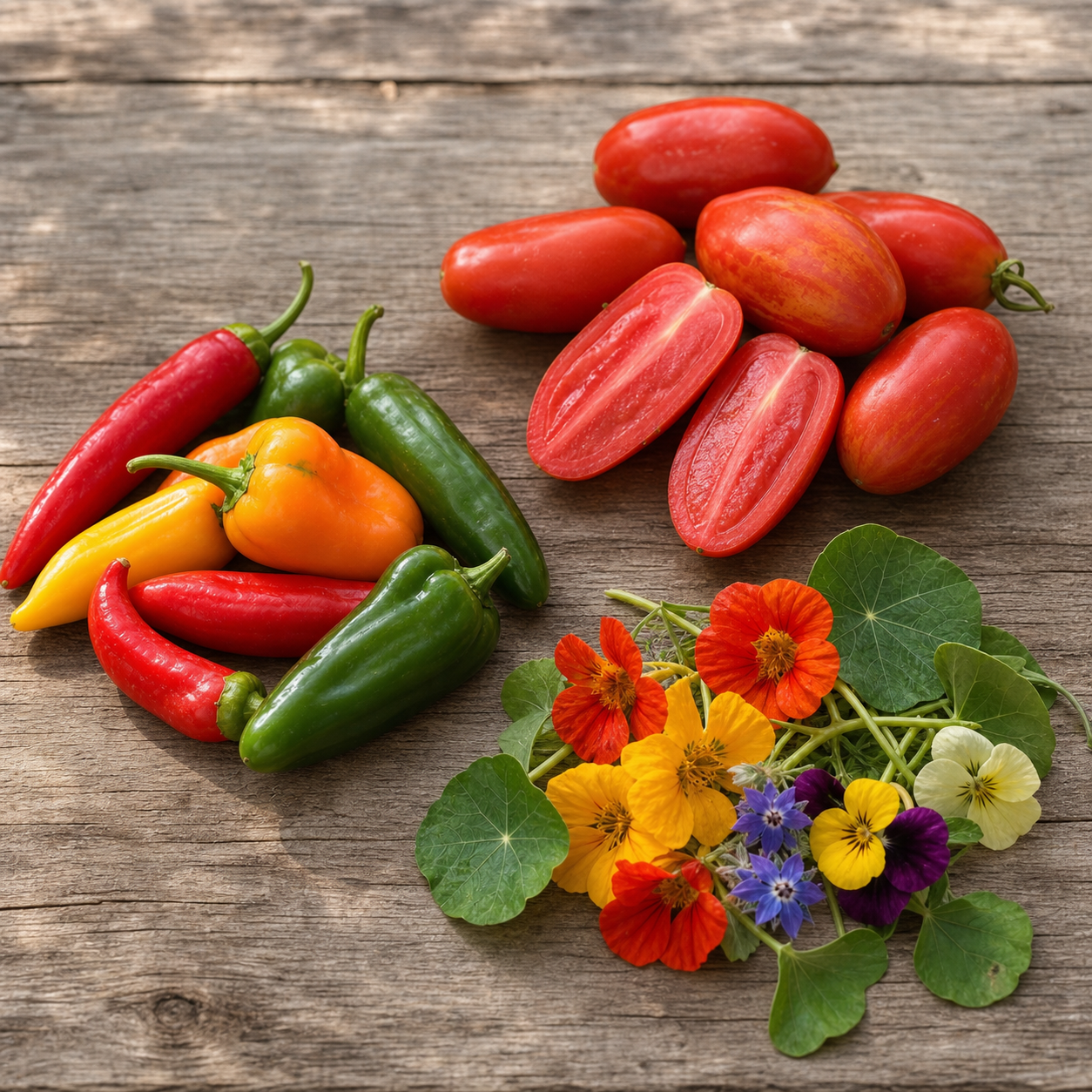



Looking for seeds now? Browse Casa Verde's complete pepper seeds for Canadian gardens, including sweet peppers, jalapeños, frying peppers, seasoning peppers, rare chilies, and superhots.
Choosing between sweet and hot peppers sounds simple until you meet the varieties in between. Some peppers have no heat but intense habanero aroma. Others are mild when young and hotter when mature. Thin-walled frying peppers cook differently from thick bells, and a tiny hot pepper can be easier to ripen than a large sweet pepper in a Canadian summer.
Heat is only one trait
Capsaicin creates the burning sensation in hot peppers, but it does not measure sweetness, fruitiness, smokiness, floral aroma, wall thickness, or texture. A useful seed choice starts with the dish you want to make and the conditions you can provide.
Sweet peppers: familiar, useful, and diverse
Sweet peppers include blocky bells, long roasting peppers, frying peppers, banana peppers, mini bells, and heatless specialty types. For roasting and spreads, try Ajvarski. For pan frying, use Jimmy Nardello or Fushimi. For compact fruit, consider Multicolor Mini Bell.
No-heat peppers with hot-pepper aroma
Habanada is the clearest example: floral and tropical, but without habanero-level burn. Nadapeño provides jalapeño character with little or no heat. These varieties are useful for families, restaurants, and sauces where pepper flavour should remain generous.
Mild peppers: the most flexible category
Mild peppers can be eaten whole, blistered, pickled, or used as seasoning. Shishito and Padrón are designed for quick high-heat cooking. Sweet Drop Biquinho is ideal for jars and garnishes. Poblano works fresh, roasted, stuffed, or dried as ancho.
Medium and hot peppers: everyday heat
Jalapeños, serrano-style peppers, cayennes, and many Thai peppers provide controllable heat for salsa, sauce, drying, and cooking. Early Jalapeño is a practical Canadian choice, Hot Portugal is excellent for sauce and flakes, and Red Thai brings concentrated heat to stir-fries and pastes.
Superhots: grow them for a reason
Ghost peppers and specialty superhots are slow, demanding plants. Grow them when you have a plan for hot sauce, fermentation, powder, or breeding. One healthy superhot plant can provide more heat than a household needs. Use gloves when processing ripe fruit and keep them separate from children's harvest baskets.
Does removing the seed remove the heat?
Most capsaicin is concentrated in the pale internal tissue that holds the seeds, not inside the seeds themselves. Removing the seeds and inner ribs can reduce heat, but it does not turn a hot pepper into a sweet pepper.
Will sweet and hot peppers cross?
Compatible pepper varieties can cross when insects move pollen between flowers. The fruit you harvest this year keeps the expected flavour and heat of the mother plant. Crossing matters when you save seed for next year, because the next generation may be different. Gardeners who want true-to-type seed should isolate varieties or use blossom bags and controlled pollination.
How many heat levels should you plant?
A practical home garden does not need ten superhots. Try a balanced mix:
- One sweet roasting or frying pepper
- One small sweet or pickling pepper
- One mild blistering pepper
- One jalapeño or medium-heat pepper
- One sauce or drying pepper
- One unusual variety chosen purely for curiosity
Sweet vs. hot pepper comparison
| Type | Best uses | Canadian growing note |
|---|---|---|
| Sweet bell and roasting | Fresh eating, roasting, stuffing | Large fruit may need a warm site and patience to colour fully |
| Frying and mild peppers | Blistering, pickling, everyday cooking | Often useful while green and well suited to shorter seasons |
| Jalapeño and medium heat | Salsa, pickles, sauce, smoking | Harvest green or allow fruit to ripen red |
| Cayenne and Thai types | Drying, flakes, hot sauce, pastes | Small fruit can ripen efficiently in warm locations |
| Habanero and superhot | Hot sauce, fermentation, powder | Start early and provide sustained warmth |
Choose the garden before the heat level
Container growers should favour compact plants and smaller fruit. Gardeners with a greenhouse can take on slower aji peppers and superhots. For an exposed or short-season site, prioritize peppers that are useful green and varieties with smaller fruit.
Keep planning
Use the best pepper varieties for Canadian gardens to build your shortlist and the Canadian pepper seed-starting calendar to choose sowing dates. For the entire season, follow How to Grow Peppers in Canada.
Compare sweet, mild, hot, and superhot pepper seeds →
Want exact dates for your garden? Use the free Canadian pepper seed-starting calculator with your expected last spring frost date.