


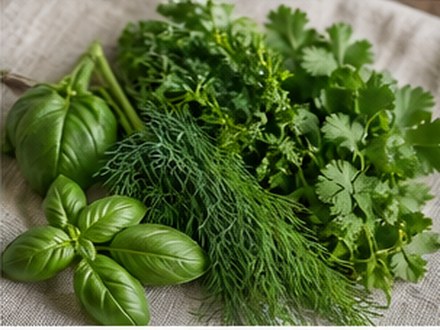



Herbs do not share one sowing schedule. Basil wants heat, cilantro prefers cool conditions, parsley germinates slowly, and dill usually resents transplanting. Separating herbs by growth pattern is more useful than starting every packet indoors on the same weekend.
Slow herbs to start indoors
Start parsley, chervil, and culantro roughly eight to twelve weeks before transplanting when you can provide strong light. Parsley is naturally slow to emerge. Menuette Parsley and Culantro reward patience.
Warm herbs to start indoors
Start basil four to six weeks before transplanting. Earlier sowing can create oversized plants that flower indoors. Genovese Basil, Lemon Basil, Lime Basil, and Purple Ruffles all need warm soil and should not be planted outside into cold nights.
Cool herbs for direct sowing
Cilantro, dill, and chervil can be sown outside in cool spring weather. Delfino Cilantro and Dill are usually more useful in repeated small sowings than one large planting.
Succession timing
Sow cilantro and dill every two to three weeks while conditions remain suitable. Heat accelerates flowering, especially in cilantro. Let some plants flower for beneficial insects and seed while continuing to harvest younger sowings.
A working Canadian calendar
| Timing | Herbs |
|---|---|
| 10-12 weeks before frost | Parsley, culantro, slow perennial herbs |
| 4-6 weeks before frost | Basil and compact warm-season herbs |
| Early spring outdoors | Cilantro, dill, chervil |
| After frost and warm nights | Basil and culantro transplants |
| Every 2-3 weeks | Cilantro and dill succession sowings |
Light and temperature
Indoor herbs need the same disciplined lighting as vegetable seedlings. Keep basil warm, avoid constantly wet mix, and use gentle airflow. Slow parsley germination is not fixed by flooding the tray.
Container planning
Herbs fit containers well, but group them by water and temperature needs. Basil likes warmth and consistent moisture. Mediterranean herbs prefer sharper drainage. Cilantro and dill need enough depth for roots and are less happy in crowded decorative pots.
Plan the collection
Use the best culinary herbs to grow from seed in Canada to choose varieties and the rare basil guide for flavour beyond standard Genovese.
Browse culinary herb seeds in Canada
Example schedule for a mid-May frost
Start parsley and culantro from late February into early March. Start basil in early to mid-April. Direct-sow cilantro, dill, and chervil as soon as the bed can be prepared and the packet's soil-temperature guidance is met. Harden basil and culantro near the frost date, then transplant only after nights become mild.
Should herb seeds be soaked?
Most herbs do not require soaking. Parsley is sometimes soaked to encourage more even germination, but clean containers, consistent moisture, and patience matter more. Tiny seeds can be displaced by heavy watering, so use a gentle spray or bottom watering where appropriate.
Do all herbs need darkness to germinate?
No. Sowing depth varies. Some small seeds need light or only a thin covering, while larger seeds are buried more deeply. Follow the packet for the specific crop and keep the surface from crusting. Planting every herb at the same depth is a common reason for uneven trays.
When is it too late?
Fast herbs can be sown through much of the season. Basil can still produce when started later in spring, and cilantro or dill can be restarted for fall. For slow parsley and culantro, buying a transplant may be more practical after the indoor window has passed.