


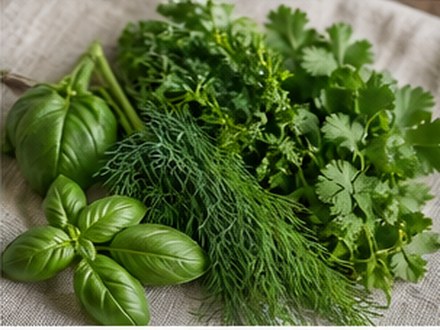



The best herbs to grow from seed are herbs you use often, harvest repeatedly, or cannot buy fresh in good condition. Canadian gardeners can grow a broad herb collection by combining cool direct-sown crops with warm herbs started indoors.
Genovese basil
Genovese Basil is the foundation for pesto, tomato salads, pasta, and summer sauces. Harvest above a pair of leaves to encourage branching and remove flower spikes when leaf production is the goal.
Lemon and lime basil
Lemon Basil and Lime Basil bring citrus aroma to fish, curries, salads, drinks, and desserts. They make a small herb garden feel more varied without requiring unfamiliar growing methods.
Cilantro and culantro
Delfino Cilantro grows well in cool intervals and benefits from succession sowing. Culantro has a stronger related flavour and prefers warmth with some protection from harsh sun. Both support salsa, sofrito, curries, and marinades.
Dill
Dill serves leaves, flowers, and seed. It belongs in pickling gardens and supports beneficial insects when allowed to bloom. Direct sow because dill develops a taproot and can resent rough transplanting.
Parsley
Menuette Parsley provides a compact, finely divided garnish and cooking herb. Parsley is slow to germinate but tolerates cool weather and can remain productive after basil declines.
Chervil
Chervil has a delicate anise-parsley flavour suited to eggs, fish, salads, and fines herbes. It prefers cool conditions and is especially useful in spring and fall.
Purple and compact basils
Purple Ruffles Basil adds dark colour to salads and garnishes. Bonsai Basil fits small pots and edges. These herbs are most valuable when their plant habit solves a space or presentation need.
A practical six-herb garden
- Genovese basil for volume
- Lemon or lime basil for contrast
- Cilantro for cool succession harvests
- Culantro for warm-season flavour
- Dill for leaves and pickling
- Parsley or chervil for cool resilience
Preserve the surplus
Freeze basil as pesto or chopped in oil, dry sturdy herbs in moving air away from direct sun, and collect mature cilantro and dill seed. Label preserved herbs with the variety and harvest date.
Match timing to the herb
Read when to start herb seeds in Canada before sowing. For a deeper basil comparison, use the rare basil guide.
Shop Casa Verde culinary herb seeds
Annual, biennial, and perennial habits
Basil, cilantro, dill, and chervil are usually treated as annual crops. Parsley is biennial but commonly grown for one season. Thyme, sage, and other perennials can return when the variety, site, drainage, and winter exposure are suitable. Plant habit affects where the herb belongs and how quickly you should expect a full harvest.
Grow herbs by kitchen frequency
Give the most space to the herb you use by the handful. Basil for pesto needs more plants than chervil used as a finishing herb. Cilantro users may need repeated sowings, while a small amount of culantro can season many dishes because its flavour is strong.
Harvesting for continued growth
Cut basil above a leaf pair, take outer parsley stems, and harvest cilantro or dill while leaving enough foliage for the plant to continue. Avoid stripping a young plant completely. Frequent, moderate harvests usually produce better quality than waiting for one oversized cut.
Flowers and seed are also harvests
Dill flowers flavour pickles, cilantro seed becomes coriander, and basil flowers can be edible and aromatic. Let selected plants mature when seed or flowers are part of the plan. Keep other plants pinched when leaf production matters most.