





Aji peppers are not just about heat. Their real value is fruit: mango, citrus, apricot, floral notes, and warm aromatic spice that makes sauces taste layered.
The Bright Sauce Peppers
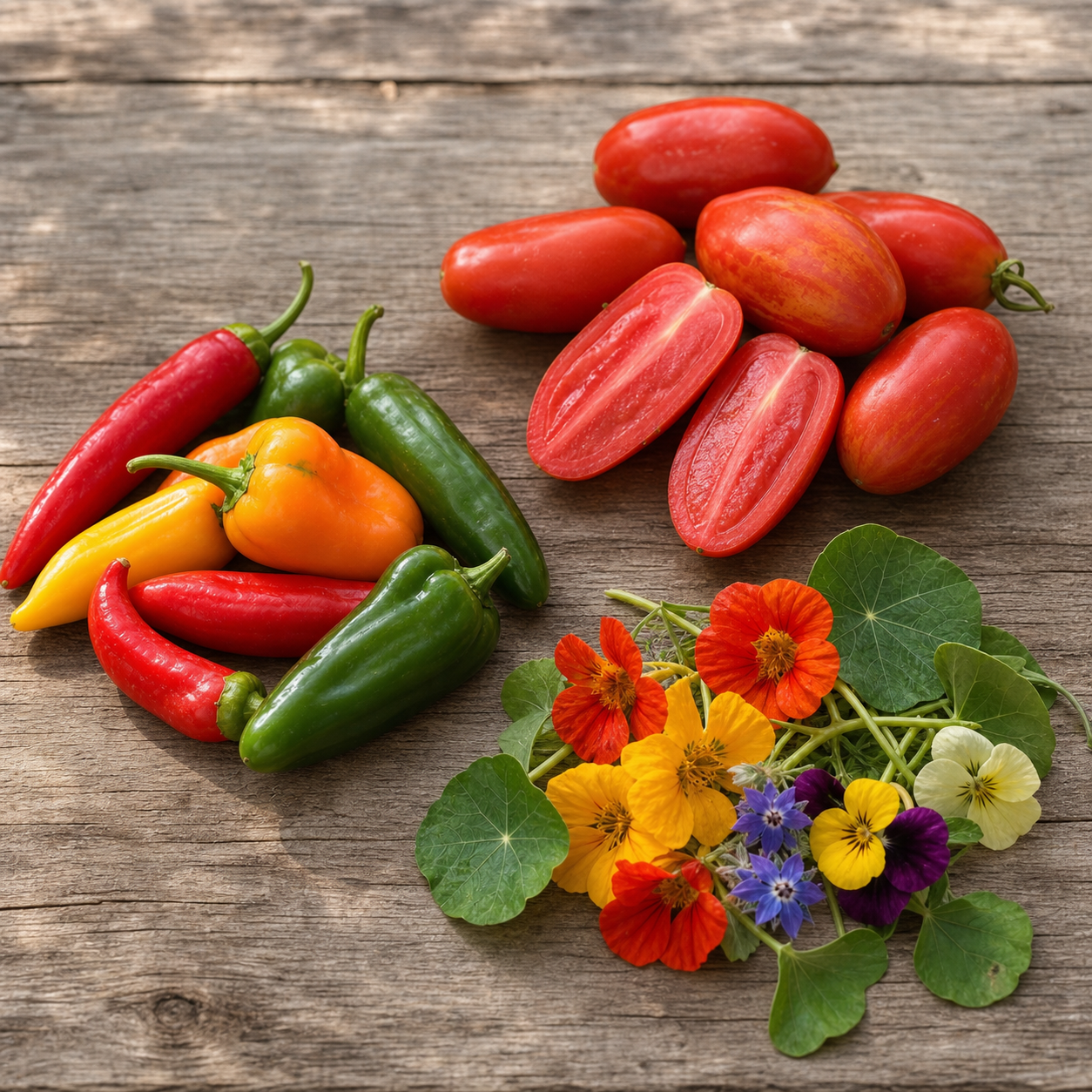
Aji Amarillo is the classic golden sauce pepper, while Aji Mango and Ahi Fantasy Peach bring tropical colour and softer fruit notes.
The Aromatic Seasoning Peppers
Aji Dulce Puerto Rico and Aji Cachucha are the peppers to grow for sofrito, rice, beans, stews, and marinades where aroma matters more than raw fire.
The Unusual Table Peppers
Aji Fantasy White, Aji Margarantino Yellow, and Aji Erotica are the varieties that make a pepper harvest feel like a collection, not a commodity.
Which Aji pepper should you choose?
“Aji” is a broad culinary name, not one single flavour or heat level. Many of the long, fruity sauce peppers are Capsicum baccatum, while Caribbean seasoning peppers such as Aji Cachucha and Aji Dulce are often Capsicum chinense. Choose by what you want to cook: Aji Amarillo for golden sauces and marinades, mild seasoning types for sofrito, and aromatic baccatum varieties for fresh salsa, drying and fermented sauce.
Heat labels are useful, but ripeness matters just as much. Most Aji peppers develop their fullest fruit aroma after they reach their mature colour. A green pod can be crisp and useful; a fully coloured pod is usually the better choice when the goal is a fragrant sauce rather than simple heat.
Growing Aji peppers in Canadian gardens
Aji peppers need a longer head start than quick annual vegetables. For most Canadian gardens, sow indoors roughly 10 to 12 weeks before the local average last frost. Warm germination conditions, steady moisture and strong light help seedlings get moving without becoming stretched. Our Canadian pepper seed-starting calculator turns your local frost date into a practical sowing window.
Move plants outdoors only after frost risk has passed and nights have become reliably mild. Harden seedlings off gradually over about a week so leaves adjust to direct sun and wind. Many baccatum peppers grow taller and wider than compact annuum types, so give them room, use a stake or cage early, and avoid burying a small plant behind faster crops.
- Containers: use a generous pot with drainage; larger soil volume is more forgiving during hot, dry weather.
- Feeding: use balanced fertility early, then avoid pushing excessive leafy growth once flowering begins.
- Short seasons: prioritize sun, warmth and an early indoor start. A temporary cover can help during cool spring nights.
- Harvest: pick some pods green for immediate cooking, but leave enough to colour fully for the most aromatic sauces.
Using the harvest
Taste a small piece before committing a whole harvest to one recipe because heat can vary from pod to pod. Separate mild seasoning peppers from hotter sauce peppers, label freezer bags by variety, and preserve ripe fruit in small batches. Aji peppers freeze well for cooked sauces, can be dried for powder, and are especially good in fermented sauces where their fruit character remains noticeable.
Casa Verde takeaways
- Grow Aji peppers when you want fruit and aroma, not only Scoville heat.
- Use ripe Aji peppers in sauces, ceviche-style dressings, beans, rice, and grilled food.
- Explore more pepper seeds.
