


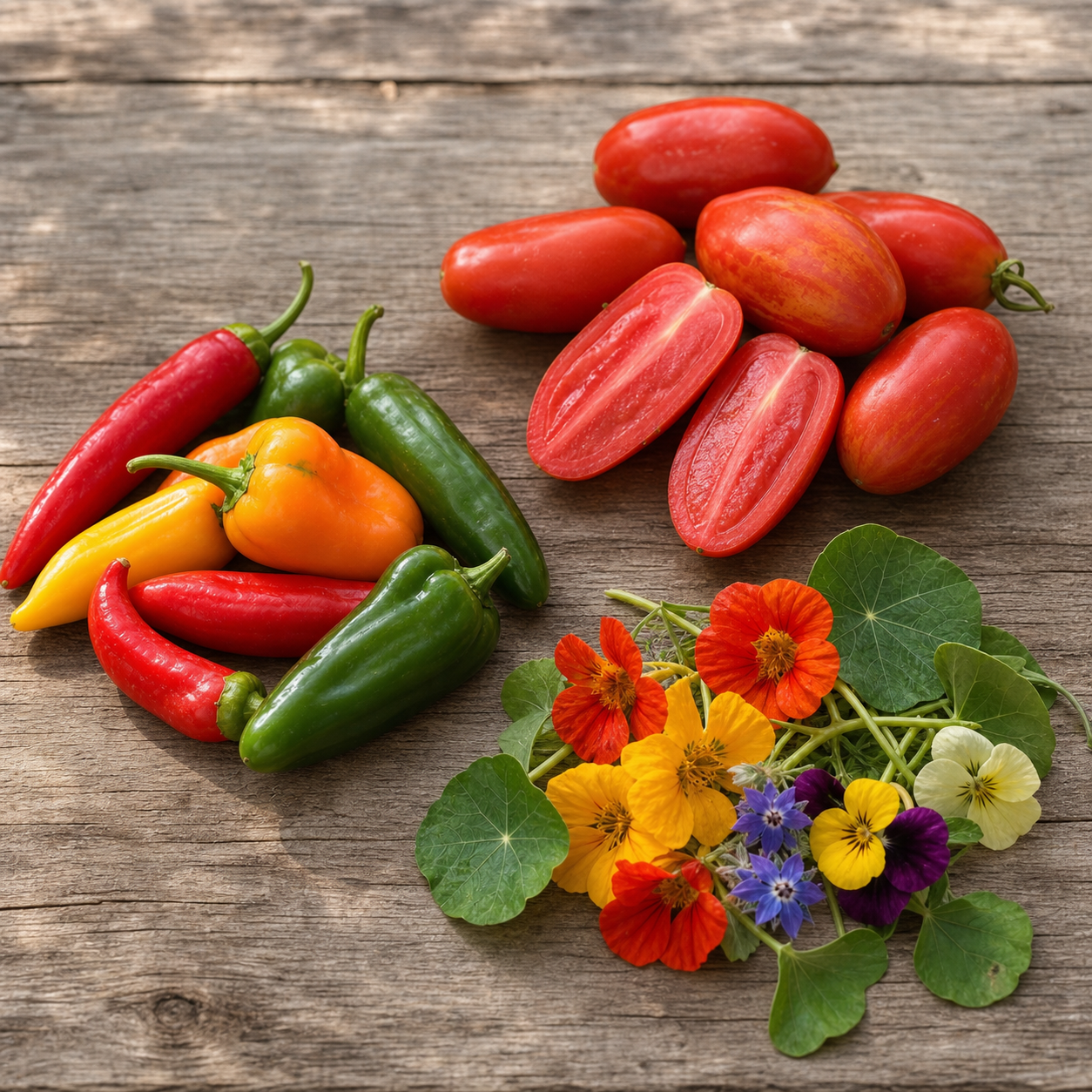
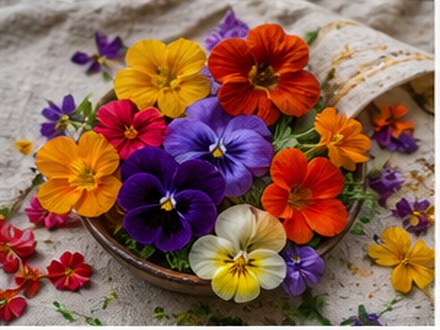



Edible flowers should do more than sit on top of a plate. The right varieties add peppery bite, citrus notes, cucumber freshness, colour, and a sense of garden immediacy.
The Best Everyday Garnish Flowers
Viola Sorbet Delft Blue, Tiger Eye Viola, and Johnny Jump-Up Viola are small, reliable, and easy to place on salads, cakes, butter, and composed plates.
Flowers With Distinct Flavour
Nasturtium Alaskan brings peppery leaves and flowers, Borage gives cucumber freshness, and Lemon Gem Marigold adds citrusy herb notes.
Colour Flowers
Bachelor Button Blue Boy, Barcelona Pink Dianthus, and Monaco Orange Snapdragon expand the palette.
Food safety comes before decoration
Eat a flower only when its botanical identity and edible parts are confirmed. A common name is not enough, and a flower that resembles an edible variety may not be safe. Use plants grown from known seed without ornamental pesticides or systemic treatments. Flowers from florists, garden centres and roadside locations should be treated as ornamental unless their production history is clear.
Try a small amount first, particularly when serving children or guests with allergies. Some plants have edible petals but bitter or unsuitable centres, stems or leaves. Remove the green heel from large nasturtium flowers if it tastes harsh, and separate petals from tough bases when the recipe calls for a delicate texture.
Planning a steady harvest in Canada
Different edible flowers prefer different seasons. Violas and calendula handle cool spring weather, while nasturtiums and marigolds should go out after frost risk has passed. Borage and nasturtiums are usually easiest when direct-sown because they grow quickly and dislike unnecessary root disturbance. Sow modest batches several weeks apart instead of planting everything on one date.
- Containers: use clean potting mix and keep edible-flower pots separate from treated ornamentals.
- Harvest time: pick open, fresh flowers in the cool part of the morning after dew has dried.
- Cleaning: inspect for insects, shake gently and rinse only when needed; wet petals bruise quickly.
- Storage: use flowers promptly or refrigerate them in a lightly covered container lined with a barely damp towel.
Match the flower to the dish
Flavour should determine placement. Nasturtiums add peppery heat to salads and savoury butter. Borage brings a mild cucumber note to cold drinks and yogurt dishes. Calendula petals contribute colour and a light herbal bitterness. Violas are delicate and best where their subtle flavour will not be overwhelmed.
Keep the garnish intentional: one flavourful flower repeated across a dish is often better than a mixed handful. Explore our edible flower seeds and confirm the edible parts listed for each variety before planning the menu.
Let some flowers remain in the garden
Harvest selectively rather than stripping every open bloom. Leaving flowers supports pollinators, gives the plant energy to keep growing and allows a portion of the crop to set seed when desired. Deadhead damaged or fading blooms and continue watering during dry periods. For restaurant-style presentation, pick fewer pristine flowers and handle them carefully instead of gathering a large volume that will deteriorate before service.
Casa Verde takeaways
- Grow edible flowers without sprays.
- Pick flowers in the cool part of the day.
- Explore edible flower seeds.
Continue this topic: What Are Culinary Seeds? A Seed-to-Table Garden Guide and Best Culinary Seeds for Canadian Gardens. Browse the culinary seed collection.