




 Kitchen Pepper
Manganji Pepper
The Manganji Pepper (Capsicum annuum), also known as Manganji Togarashi, is an heirloom sweet pepper from Kyoto, Japan. It is a hybrid of a native Fushimi pepper and a California Wonder bell pepper, bred for its large size, thick flesh, ...
Shop all pepper seeds in Canada
- Origin
- Kyoto
The Manganji Pepper (Capsicum annuum), also known as Manganji Togarashi, is an heirloom sweet pepper from Kyoto, Japan. It is a hybrid of a native Fushimi pepper and a California Wonder bell pepper, bred for its large size, thick flesh, and distinctively mild, sweet flavor. As a protected traditional vegetable of Kyoto, it is celebrated as the "King of Japanese Chili peppers".
- Flavor: Sweet, earthy, and savory, with a flavor more complex than other mild Japanese peppers. It has thick, juicy walls and a crisp, tender texture. When mature, it can have a more pronounced earthy or slightly smoky flavor.
- Heat: Very mild, with almost no heat, generally ranging from 0–100 Scoville Heat Units (SHU). It is possible to get an occasional pod with a hint of warmth, but it is reliably sweet.
- Origin: Developed in the Manganji district of Maizuru City, Kyoto, Japan, in the early 20th century.
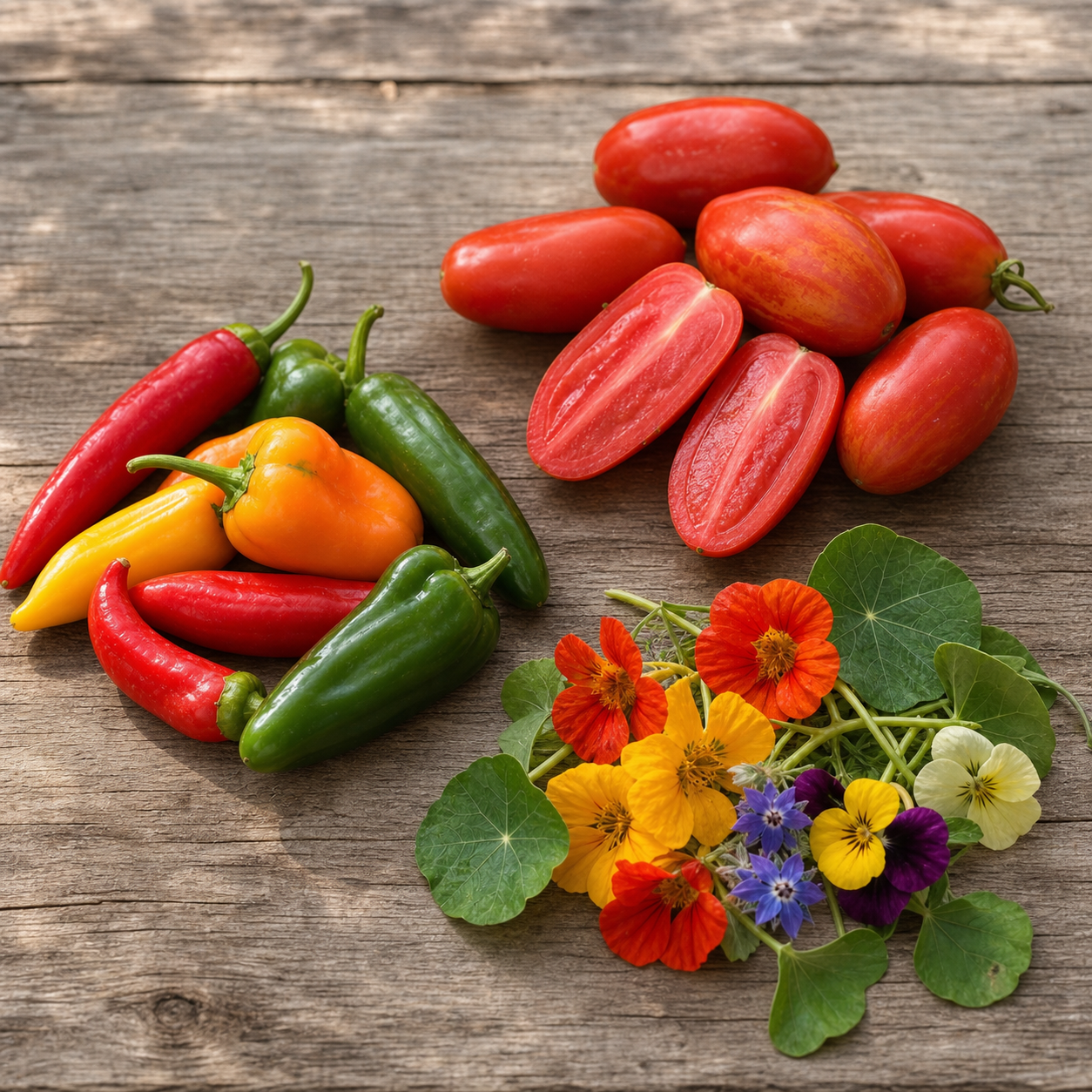
- Appearance: Long and slender, often reaching 6–10 inches, with wrinkled shoulders. The pods have a smooth, glossy skin and are typically harvested green, but they ripen to a vibrant red.
-
Culinary Uses:
- Roasted or grilled: A classic preparation is to skillet-roast the peppers until they blister. They can then be served with salt, bonito flakes, or grated ginger.
- Tempura: The peppers are often battered and deep-fried whole.
- Stuffed: Their size and thick walls make them perfect for stuffing with a filling of meat, rice, or cheese before searing.
- Pickled or simmered: They can be pickled for extended use as a condiment or simmered in a light broth as a side dish.
- Unusual pairings: In Kyoto, they have been used in surprising applications, such as candies and chocolates.
Start indoors 8–10 weeks before last frost. Germinate at 26–30 °C on a heat mat; peppers stall below 22 °C. Pot up to 10–15 cm before hardening off outside after nights stay above 12 °C.
Feed balanced through bloom, then bump potassium for fruiting. Stake taller varieties. More detail in our full Canadian growing guide.
Match the pepper to the technique: thin-walled varieties blister fast in a hot pan; thick-walled ones roast or stuff beautifully; fruit-forward ones make balanced sauces and pickles. The variety's flavour profile is your shortcut — see Choosing the right pepper for a use-case guide.


