


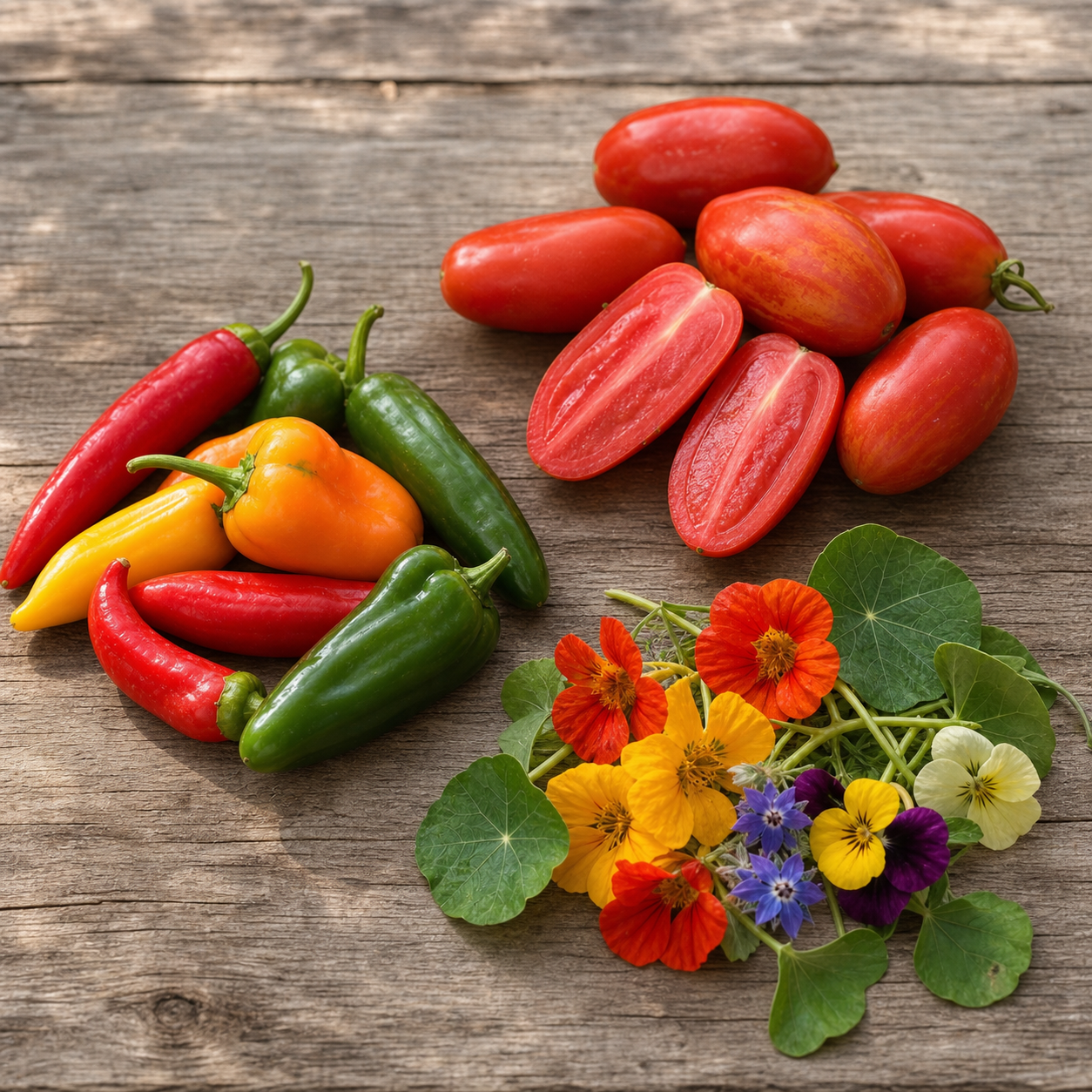



A great tomato plate is not complicated. It is edited. Use colour, acidity, salt, herbs, and a few textures to make each tomato variety feel distinct.
Build the Palette
Start with dark tomatoes like Black Beauty, add marbled wedges of Ananas Noir, then bring brightness with Green Zebra, Lemon Boy, and Sungella.
Add Shape Contrast
Blue Pear Tomato and Amethyst Jewel Tomato add different silhouettes, so the plate does not read as one pile of slices.
Season Like a Cook
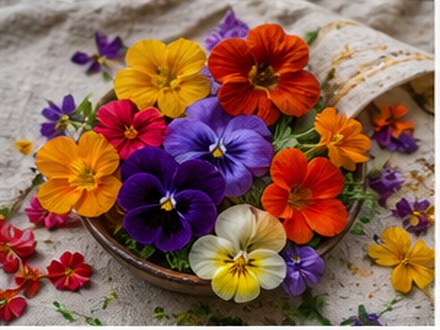
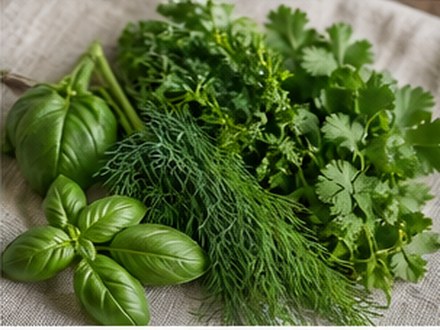
Use olive oil, vinegar or lemon, basil, shallot, and edible flowers. Keep the dressing light so the colour and texture stay visible.
Choose by flavour as well as colour
Colour gives the plate structure, but flavour keeps it from becoming decoration. Dark tomatoes tend to bring savoury depth, green-when-ripe varieties add bright acidity, yellow and orange tomatoes can soften the plate with sweetness, and red tomatoes provide the familiar tomato centre. Variety and growing conditions both matter, so taste each tomato before deciding where it belongs.
A useful plate has contrast without becoming crowded. Start with one anchor tomato, add one brighter variety and one small or differently shaped tomato. Three excellent varieties, each cut with intention, usually make a stronger plate than eight varieties sliced the same way.
Grow the plate in a Canadian garden
Plan the combination before sowing. In much of Canada, tomato seeds are started indoors about six to eight weeks before the average last frost, then transplanted after frost risk has passed and the soil has warmed. Starting too early can leave you managing oversized plants indoors; starting on time under strong light usually produces a sturdier transplant. Use our Canadian tomato-starting calendar to work backward from your local conditions.
Mix plant habits as deliberately as colours. An indeterminate heirloom can supply large slicing fruit over a long window, while a more compact or earlier variety helps make sure the plate is not waiting on one late plant. Browse the tomato seed collection for colour, shape and maturity information, then choose a small group that can ripen within your season.
A simple plating workflow
- Bring ripe tomatoes to room temperature and taste each variety separately.
- Cut large tomatoes into slabs or wedges, small tomatoes into halves, and pear-shaped fruit lengthwise.
- Season with salt shortly before serving so the tomatoes release enough juice to mingle with the dressing without collapsing.
- Add acid only where the plate needs it. A naturally bright green tomato may need less vinegar than a dense, sweet slicer.
- Finish with one herb, a restrained amount of oil and, if useful, an edible flower that contributes flavour as well as colour.
If the harvest is uneven, build the plate in stages rather than picking every fruit early. Tomatoes that finish ripening indoors can still be excellent, but the best plate begins with fruit harvested as close as possible to its ideal texture.
Casa Verde takeaways
- Use at least three colours and two shapes.
- Cut each tomato differently: wedges, slabs, halves, and thin slices.
- Season the plate, not each tomato separately.
Continue this topic: When to Start Tomato Seeds in Canada: A Practical Calendar and Determinate vs. Indeterminate Tomatoes for Canadian Gardens. Browse the tomato seed collection.