

 Collector Pepper
Sugar Rush Stripey
The Sugar Rush Stripey pepper (Capsicum baccatum) is a uniquely striped, sweet, and moderately spicy variety that arose as a natural mutation of the Sugar Rush Peach pepper. It is celebrated for both its exceptional flavor and striking v...
Shop all pepper seeds in Canada
- Origin
- Finland
The Sugar Rush Stripey pepper (Capsicum baccatum) is a uniquely striped, sweet, and moderately spicy variety that arose as a natural mutation of the Sugar Rush Peach pepper. It is celebrated for both its exceptional flavor and striking visual appeal.
- Flavor: Sweet and fruity, often with notes of tropical fruit. It has a distinctive crunchy texture and clean flavor profile, making it stand out from many other medium-heat peppers.
- Heat: Moderate, with a range of 25,000–50,000 Scoville Heat Units (SHU). This gives it a pleasant, manageable heat level similar to a cayenne.
- Origin: The Sugar Rush pepper was first developed in Finland around 2010. The striped mutation was discovered in the USA by grower Tom Motta in 2015, and the variety was further stabilized in Wales by Chris Fowler.
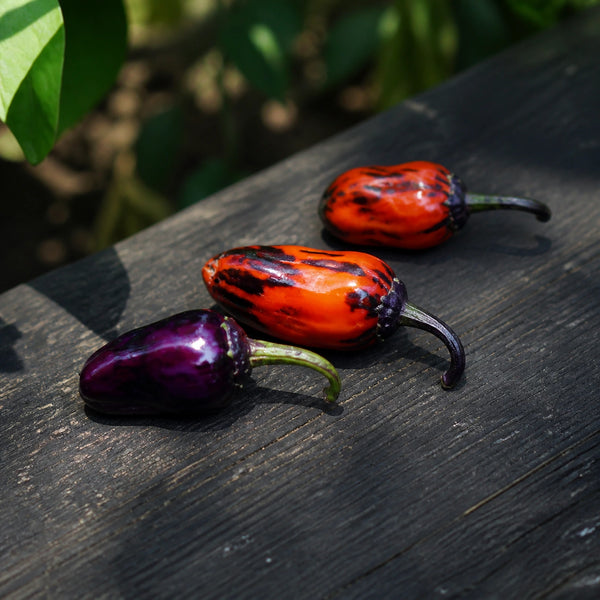
- Appearance: The long, tapering pods have a whimsical, somewhat squiggly shape. They ripen from a pale peachy or cream color to a final orange-peach with unique, vertical red stripes.
-
Culinary Uses:
- Pickling: Its thick, crunchy walls make it an excellent candidate for pickling.
- Fresh: Delicious sliced fresh and served with cheese and crackers.
- Hot Sauce: The fruity flavor and manageable heat lend themselves to making excellent, flavorful hot sauces.
- Dehydrating: The peppers can be dried and ground into a unique and flavorful powder.
Want the curated set? This variety is also included in the Hot Sauce Garden Pack.
Start indoors 8–10 weeks before last frost. Germinate at 26–30 °C on a heat mat; peppers stall below 22 °C. Pot up to 10–15 cm before hardening off outside after nights stay above 12 °C.
Feed balanced through bloom, then bump potassium for fruiting. Stake taller varieties. More detail in our full Canadian growing guide.
Match the pepper to the technique: thin-walled varieties blister fast in a hot pan; thick-walled ones roast or stuff beautifully; fruit-forward ones make balanced sauces and pickles. The variety's flavour profile is your shortcut — see Choosing the right pepper for a use-case guide.