



In the kitchen
- Fresh eating: Cut into thick strips for salads and dipping.
- Roasting: Roast halves until tender and serve with herbs.
- Sauce: Blend roasted flesh into a sweet pepper sauce.

 Pour la cuisine

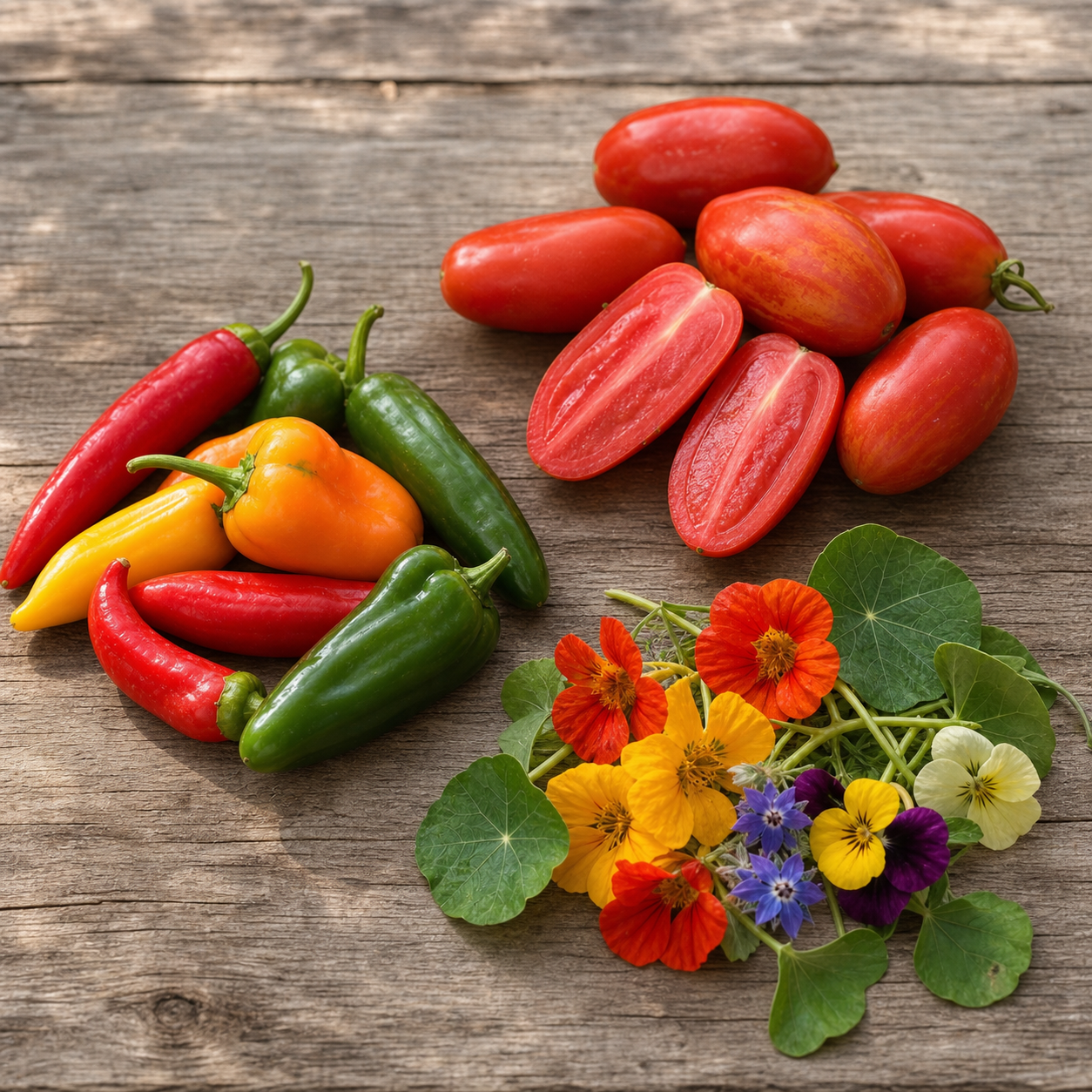
2027 KITCHEN PEPPERS · SWEETOrange Lesya Pepper: fresh eating and roasting Orange Lesya is a sweet, thick-fleshed pepper for crunchy slices, colourful salads and slow roasting. Its heart-shaped orange pods bring a bright contrast to a ki...
Voir toutes les semences de piments et de poivrons
Orange Lesya is a sweet, thick-fleshed pepper for crunchy slices, colourful salads and slow roasting. Its heart-shaped orange pods bring a bright contrast to a kitchen harvest.
Sweet
10+ Seeds per Packet
Capsicum annuum
Fresh eating and roasting
Grow it when the pepper itself is the dish: generous slices for a snack plate, roasted halves for lunch, or a sweet base for blended sauces.
Flavour: Sweet, thick-fleshed and colourful
Appearance: Heart-shaped pods that ripen golden orange
Crop: Warm-season pepper, grown as an annual in Canada
Best uses: Fresh eating and roasting
Start indoors 8–10 weeks before your expected last frost, allowing extra time for slower seasoning peppers. Keep the seed-starting mix warm and evenly moist. Harden plants off gradually and transplant after frost into a sunny, sheltered position once nights are reliably warm. In a short season, a container in a warm spot can help you manage the crop.
This is a sweet pepper grown for flavour rather than heat.
Yes. Use a generous container with drainage, full sun and consistent watering. Feed regularly and support the plant as fruit develops.
10+ pepper seeds for starting your own plants. This is a seed listing, not fresh peppers or live plants.
Also searched as Orange Leysa. This is the orange-fruited variety, distinct from the red Leysa listing.
Start indoors 8–10 weeks before last frost. Germinate at 26–30 °C on a heat mat; peppers stall below 22 °C. Pot up to 10–15 cm before hardening off outside after nights stay above 12 °C.
Feed balanced through bloom, then bump potassium for fruiting. Stake taller varieties. More detail in our full Canadian growing guide.
Match the pepper to the technique: thin-walled varieties blister fast in a hot pan; thick-walled ones roast or stuff beautifully; fruit-forward ones make balanced sauces and pickles. The variety's flavour profile is your shortcut — see Choosing the right pepper for a use-case guide.


