May 6, 2026

Eggplants for Cooks Who Are Bored of Standard Purple

Eggplants for Cooks Who Are Bored of Standard Purple

Eggplant is not one vegetable. It is a whole world of shapes and textures: small and seedy, long and silky, round and creamy, striped, white, green, orange, and lavender.

The Visual Showpieces

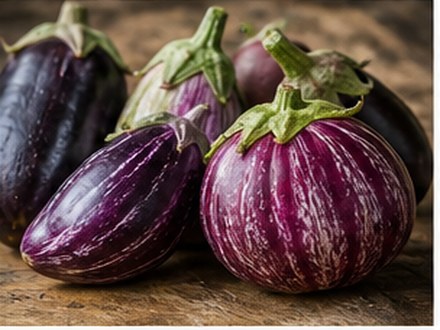
Turkish Orange Eggplant, Listada de Gandia Eggplant, and Rosa Bianca Eggplant are the varieties that make people rethink what eggplant can look like.

The Cooking Workhorses

Mitoyo Japanese Eggplant is excellent for grilling and glazing, while Snowy White Eggplant gives a pale, creamy counterpoint.

The Thai Eggplants

Thai Green Eggplant and Thai Round Eggplant are built for curries and dishes where eggplant should hold its structure.

Starting eggplant for a Canadian growing season

Eggplant rewards an early start and steady warmth. In most Canadian gardens, sow indoors about eight to ten weeks before the local average last frost. Seeds germinate most reliably in warm mix, and young plants stay compact when they receive strong light as soon as they emerge. Pot seedlings up before they become root-bound, but avoid repeatedly disturbing the roots.

Wait until frost risk has passed and both days and nights are consistently mild before transplanting. Harden plants off gradually over seven to ten days, beginning with sheltered shade and increasing their exposure to sun and wind. A black container, raised bed or warm south-facing site can help in a short season, but the soil must still drain well.

  • Spacing: give full-size plants room for air movement and easy harvesting.
  • Water: keep moisture even, especially during flowering and fruit set; repeated drought can reduce yield and quality.
  • Support: stake heavy-fruited plants before branches begin to lean.
  • Containers: choose a compact variety and a generous pot rather than crowding several plants together.

Harvest for the texture you want

Do not wait for fruit to reach its maximum possible size. Eggplants are usually best while the skin is glossy and the fruit feels firm with a slight give. Dull skin, hard seeds and spongy flesh indicate that a fruit has stayed on the plant too long. Use pruners and leave a short stem attached because the calyx can be sharp and pulling can damage the branch.

Shape and maturity influence cooking more than colour alone. Long Asian types cook quickly and suit stir-fries or grilling. Small round types are convenient for stuffing and curries. Dense Italian-style fruit stands up to roasting, frying and layered dishes. Salt only when the recipe benefits from drawing out moisture; many fresh, properly harvested varieties do not need a long salting step.

Browse our eggplant seeds by shape, colour and culinary use, then choose a variety whose days to maturity fit your local season.

Save the warmest spot for eggplant

Eggplant should not be used as the first test of whether spring has arrived. If tomatoes are merely tolerating the weather, eggplants will usually grow better indoors for a few more days. Once established, remove fruit regularly so the plant continues flowering, and bring the final sound fruit indoors before a hard frost. Small late fruit can still be excellent when harvested firm and cooked soon after picking.

Casa Verde takeaways

  • Choose long eggplants for grilling, round types for curries, and striped types for visual plates.
  • Harvest eggplant glossy and firm.
  • Browse eggplant seeds.
culinary seedseggplant seedsrare eggplant

Founder and operator of Casa Verde Microfarm and Casa Verde Seeds in Vaudreuil-Dorion, Québec. Michael writes practical seed and growing guides for Canadian gardeners.